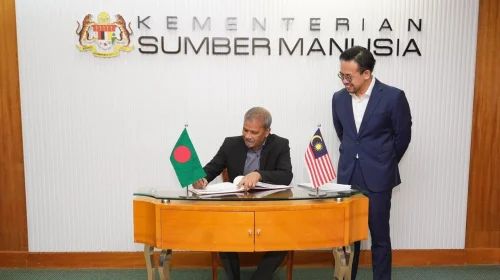
Dr. Asif Nazrul, advisor to the Ministry of Expatriate Welfare and Overseas Employment, announced that within the next two to three weeks, a labor agreement will be signed with Saudi Arabia. Such a contract has never been made with Bangladesh before.
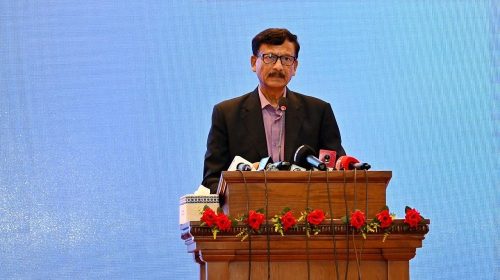
He made these remarks on Saturday (August 2) at the “Remittance Warriors Day” event held at the International Mother Language Institute auditorium in Dhaka, organized by the Ministry of Expatriate Welfare and Overseas Employment.
Dr. Asif said,
“For the first time in Bangladesh’s history, an agreement is being made specifically for expatriate workers with Saudi Arabia. Previous governments had tried to arrange this many times but were unsuccessful. India and Pakistan do not have such agreements with Saudi Arabia, but Bangladesh is now achieving this. We believe this contract will enhance the safety and protection of our workers in Saudi Arabia.”
He also shared that the process has started to send workers who were unable to travel to Malaysia last year despite having tickets and visas. When he mentioned this assurance from Malaysia during a meeting in Dhaka, he faced harsh criticism and insults on social media. However, he remains hopeful that within two to three weeks, the contract with Saudi Arabia will be finalized.
Dr. Asif added,
“We have taken steps to simplify the re-integration process and fully digitized it to reduce the difficulties faced by workers. New overseas travelers will benefit from this.”
Advising expatriates, he said,
“For those who have returned or plan to go abroad, take proper preparations beforehand. Make sure to investigate if anyone is trying to deceive you. Don’t become so desperate to go abroad that you skip due diligence. Remember, going abroad is not heaven.”
He further remarked,
“I have witnessed very poor living conditions in Saudi Arabia, worse than many slums here in Bangladesh. Spending 8 to 9 lakh taka to live such a harsh life is not worth it. If you have 10 lakh taka, invest it in a small business here in the country. There are millions of consumers in Bangladesh, and even a small shop can be profitable. I am not discouraging you, just advising you not to desperately rush abroad.”
Finally, Dr. Asif said,
“Ninety-nine percent of workers going abroad are honest and hardworking, but the one percent causes many problems that bring hardship for the rest. This also makes it more difficult to send workers overseas.”